


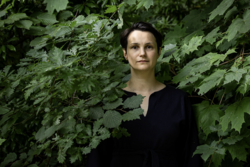
Prof. Dr.-Ing. Radostina Radulova-Stahmer (she/her)
Jade University of Applied Sciences
Department of Architecture
Ofener Straße 16/19
ZA Room 106
26121 Oldenburg
Germany
Phone +49 441 7708-3222
radulova-stahmer [at] jade-hs.de
www.jade-hs.de/regenerative-urbanism

Consultation hours: by appointment
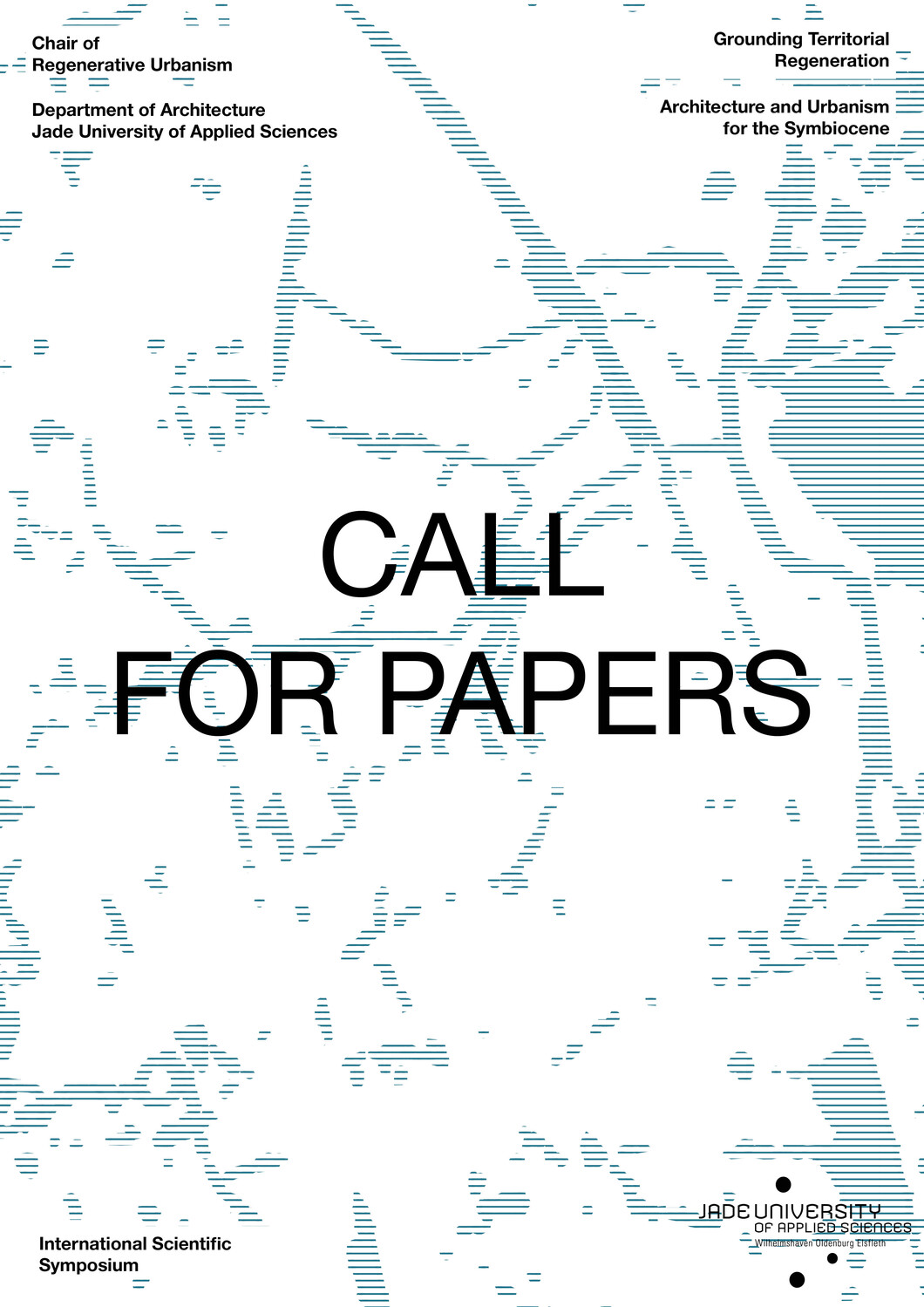
In an era defined by intertwined biosphere crisis, technological disruptions, territorial injustices, and epistemic crises, urbanism can no longer be framed as a question of density, typology, optimization, mitigation, or resilience alone. Grounding Territorial Regeneration positions territory not as a passive substrate for intervention, but as a living system, as multi-scalar assemblage of human and more-than-human relations, and metabolic processes.
The symposium departs from the premise that the Anthropocene paradigm—grounded in extraction, separation, and human exceptionalism—has reached its conceptual and operational limits. Where the Anthropocene is structured by control, and externalisation, we introduce the concept of the Symbiocene, that is grounded in mutual dependence, care, and shared metabolisms. For architecture and urbanism, this entails a fundamental reorientation: away from solution-driven, object-centred interventions toward situated, long-term, and accountable forms of spatial practice that actively participate in the regeneration of territorial living systems. It shifts the emphasis from dominance to co-evolution, from extraction to reciprocity, and from isolated objects to relational assemblages. Territories are understood not as reservoirs of resources or sites of intervention, but as living, more-than-human systems, constituted through entangled ecological, social, and technical relations.
Territorial regeneration is framed a transition process of re-synchronisation between human activities and planetary boundaries. Within the Symbiocene framework, architecture and urbanism are understood as critical and design-driven operative interfaces between metabolic systems, cultural practices, and political ecologies.
We welcome theoretical, empirical and practice-based submissions on, but not limited to, the following topics:
—CARE PROTOCOLS—Care Protocols for Territorial Regeneration
Territorial regeneration understood as a practice of care across temporal, ecological, and social scales. Focus on maintenance, stewardship, vulnerability, and long-term responsibility as operative design protocols, shifting from project-based intervention to continuous territorial care.
—CIRCULAR RESOURCES—Circularity for Territorial Systems: Water, Soil, Material Flows
Territories conceived as metabolic systems structured by circular flows of water, soil, energy, and materials. Focus on regenerative resource cycles, waste-as-resource logics, and the spatialization of circular economies beyond sectoral and infrastructural silos.
—POST-ANTHROPOCENTRIC COMMONS—Commoning Agencies beyond the Anthropocene
Territorial regeneration through shared agencies of humans, more-than-humans, technologies and institutions. Focus on commons as spatial, ecological, and governance practices: multi-species habitats, collective stewardship, and non-extractive modes of inhabiting and regulating territories beyond anthropocentric frameworks.
—CRITICAL ZONES—Designing within the Thin Skin of the Earth
Territorial regeneration at the scale of the Critical Zone between atmosphere, biosphere, lithosphere, and hydrosphere. Focus on design under planetary boundary conditions, deep-time processes, and fragile couplings beyond administrative and jurisdictional logics.
—POST-CARBON IMAGINARIES—Territories after Fossil Modernity
Territorial regeneration beyond fossil infrastructures, narratives, and spatial orders. Focus on new aesthetic, spatial, and cultural models of post-fossil territories—not as transition, but as rupture.
— ENTANGLED INTELLIGENCE —AI, Territory, and Situated Computation
Artificial intelligence not as an abstract tool, but as a territorially embedded system. Themes include data ground-truthing, hybrid human–ecological–machine intelligence, and new modes of design after automation.
—POST-IRREVERSIBILITY DESIGN—Designing after Damage, Loss, and Irreversibility
Regeneration under conditions of irreversible ecological and social damage. Focus on repair, restitution, deconstruction, and working with loss—beyond narratives of optimization and progress.
—CRITICAL CASES— Case-based investigations that expose structural tensions, thresholds, and failures within socio-ecological and territorial systems. Critical cases operate as analytical devices rather than best practices, foregrounding conflict, irreversibility, and systemic breakdown to interrogate dominant planning, design, and governance paradigms and to open alternative trajectories for Territorial Regeneration.
The symposium explores how spatial practices can move beyond extractive logics and disciplinary silos toward:
- Regeneration as a long-term, open-ended process, rather than a project with fixed outcomes
- The reconstitution of territorial commons under conditions of climate stress, land commodification, and infrastructural fragility
- The role of architecture and urbanism in mediating conflict, care, and co-habitation across species and stakeholders
- New spatial imaginaries that emerge from soil, water, waste, energy, and food cycles
- Post-anthropocentric approaches to space, recognising non-human agencies as active territorial agents
- Hybrid methodologies that integrate design research, environmental data, indigenous and local knowledges, and critical theory
Positioning
Grounding Territorial Regeneration is explicitly addressed to an audience engaged in advanced academic, research-driven, and experimental practice, including scholars, doctoral researchers, and practitioners engaged in critical urbanism, architecture, landscape, geography, history, and environmental sciences. The symposium aims to foster a shared intellectual space for deep reflection, debate, and methodological experimentation.
Through keynote lectures, paper sessions, design research presentations, and roundtable discussions, it aims to create a shared critical space for reflecting on how spatial disciplines can meaningfully contribute to regenerative futures under conditions of uncertainty, instability, and irreversible change.
Submissions are expected to demonstrate conceptual rigor, critical positioning, and relevance to Territorial Regeneration. We invite passionate and inquisitive spatial thinkers, researchers, and designers to join the symposium.
Paper Formats
We invite contributions in the following formats:
- Full papers theoretical, empirical, or methodological— Critical position papers articulating emerging concepts or frameworks
- Practice-based research projects reflecting on regenerative processes and their contradictions or grounded in projects, studios, or territorial investigations
Important Dates
- Abstract submission: 01—03—2026
- Notification of acceptance: 15—03—2026
- Deadline for full paper: 15—06—2026
- Symposium dates: 1/2—10—2026 at Jade UAS Oldenburg
- Book Publication Mid 2027
Submission Guidelines
- Abstracts 300-500 words should clearly articulate: the research question or position, the theoretical and/or methodological framework, the contribution to the symposium theme
- Short Bio 100 words
Submissions and inquiries should be sent with the 'Abstract Submission Form' and the separat 'Bio Submission Form' (both in one email) to: regenerative-urbanism@ich-will-keinen-spamjade-hs.de
Download 'Abstract Submission Form'
Download 'Bio Submission Form'
Grounding Territorial Regeneration seeks contributions that rethink the foundations of architecture and urbanism as spatial practice itself, situating them as critical forces in the co-creation of regenerative, symbiotic territories, making them regenerative by design.
Here you can find more information about the Submission and the Symposium.